
PGFireBox

Biomass Power generation has always been economically difficult due to 1) the high costs of preprocessing the waste material to prepare it for the incinerator, 2) the high costs of transporting the waste material, and 3) the high capital costs of the initial installation. The New Air Burners PGFireBox addresses all these cost barriers to bring Biomass Power in line with standard power generating costs.
Learn About Air Curtain TechnologyPGFireBox
REVOLUTIONARY NEW BIOMASS POWERGENERATING SYSTEM
Biomass Power generation has always been economically difficult due to 1) the high costs of preprocessing the waste material to prepare it for the incinerator, 2) the high costs of transporting the waste material, and 3) the high capital costs of the initial installation. The New Air Burners PGFireBox addresses all these cost barriers to bring Biomass Power in line with standard power generating costs.
Learn About Air Curtain TechnologyPGFireBox
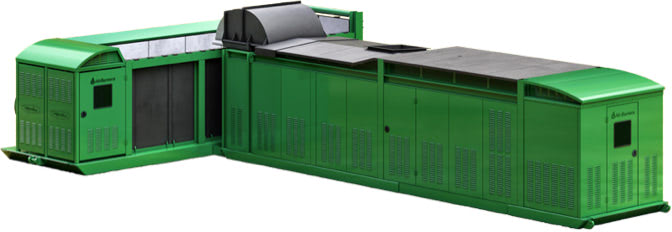
PGFireBox 100KW
The PGFireBox 100kW includes the FireBox Module, Power Module, and the Cooling Module.
| LENGTH | Power Module: 34' |
|---|---|
| LENGTH | Power Module: 10.4 m |
| WIDTH | Power Module: 7' 5" |
| WIDTH | Power Module: 2.1 m |
| HEIGHT | Power Module: 8' 5" |
| HEIGHT | Power Module: 2.6 m |
| WEIGHT | Power Module: 35,500 lbs 36,000 lbs 17,500 lbs |
| WEIGHT | Power Module: 16,100 kg 16,300 kg 7,900 kg |
| THROUGH-PUT | 6 - 8 tons/hr |
| THROUGH-PUT | 6 - 8 tons/hr |
| POWER GENERATION | Electric: 100kW Thermal: 1MW |
| PRICE RANGE | Starting at $1,146,160 |
*All specifications are approximate
PGFireBox
PGFireBox 100KW
The PGFireBox 100kW includes the FireBox Module, Power Module, and the Cooling Module.
| LENGTH | Power Module: 34' |
|---|---|
| LENGTH | Power Module: 10.4 m |
| WIDTH | Power Module: 7' 5" |
| WIDTH | Power Module: 2.1 m |
| HEIGHT | Power Module: 8' 5" |
| HEIGHT | Power Module: 2.6 m |
| WEIGHT | Power Module: 35,500 lbs 36,000 lbs 17,500 lbs |
| WEIGHT | Power Module: 16,100 kg 16,300 kg 7,900 kg |
| THROUGH-PUT | 6 - 8 tons/hr |
| THROUGH-PUT | 6 - 8 tons/hr |
| POWER GENERATION | Electric: 100kW Thermal: 1MW |
| PRICE RANGE | Starting at $1,146,160 |
*All specifications are approximate
Resources
First Portable Solution for Power Generation from Unprocessed Biomass
Air Burners designed and manufactures a revolutionary new machine. It combines two well-known and refined technologies to create the first portable solution for power generation from unprocessed biomass. We call this system the PGFireBox. Our system is available in 100kW.
This system uses two current technologies: Air Curtain pollution control technology and Organic Rankine Cycle Power Generation. We have teamed up with some of the best ORC manufacturers in the world to produce a portable self-contained unit, which generates significant amounts of electricity from vegetative waste and is the most economical and environmentally friendly machine for biomass burning.
Vegetative waste, in particular wood waste, has long been a difficult problem for community landfills and lumbering operations. Grinding it to reduce volume is expensive and extremely harmful to the environment. And, while grinding reduces the volume, you are still left with the same amount of wood waste. Ten tons of logs in gives you ten tons of wood chips out.
When you consider the amount of energy stored in wood, it is highly desirable to extract this energy instead of depositing it in a landfill and losing it forever. Wood has been used as a fuel for centuries, but extracting its energy on a large scale has been cumbersome and expensive – until now. The Air Burners 100kW PGFireBox, as an example, is delivered to a site fully self-contained and ready for use. No permanent fixtures, structures, or buildings are necessary. The PGF100 land clearing equipment can be purchased and delivered for less than the cost of a typical tub grinder.
An Air Burners PGFireBox is the most economical and environmentally sound machine to eliminate vegetative waste. The PGFireBox accomplishes five important tasks:
1. It reduces wood waste by 98%. Ten tons of logs in gives you a couple hundred pounds of ash out. This remainder is a clean, natural ash, which is a highly desirable recycled product for agriculture, growers, and nurseries. It is also an additive to the daily landfill cover.
2. It captures energy from the wood waste and converts it to electricity, providing an additional income from its use or sale.
3. It is an ideal component for a power company’s goal of better “distributed power.” Distributed power helps provide a more secure electrical grid less susceptible to interruptions.
4. It significantly reduces greenhouse gas emissions compared to the current methods of disposal: grinding and landfilling.
5. It is easily relocated. One of the major problems for biomass energy is the Waste Travel Zone: the distance waste must travel to the biomass facility. It is not uncommon for a permanently placed biomass energy plant to close because it has become too costly to transport the waste. Consider as an example a small town that installs a biomass energy system to eliminate waste generated by cleaning the forests to prevent wildfires. After 5 or 8 years, the forest at 50 miles is clear. Beyond that radius, the transportation costs are too high and the permanent plant must close. With the PGFireBox, the system is simply disassembled and moved; no permanent structures are necessary.
Air Burners designed and manufactures a revolutionary new machine. It combines two well-known and refined technologies to create the first portable solution for power generation from unprocessed biomass. We call this system the PGFireBox. Our system is available in 100kW.
This system uses two current technologies: Air Curtain pollution control technology and Organic Rankine Cycle Power Generation. We have teamed up with some of the best ORC manufacturers in the world to produce a portable self-contained unit, which generates significant amounts of electricity from vegetative waste and is the most economical and environmentally friendly machine for biomass burning.
Vegetative waste, in particular wood waste, has long been a difficult problem for community landfills and lumbering operations. Grinding it to reduce volume is expensive and extremely harmful to the environment. And, while grinding reduces the volume, you are still left with the same amount of wood waste. Ten tons of logs in gives you ten tons of wood chips out.
When you consider the amount of energy stored in wood, it is highly desirable to extract this energy instead of depositing it in a landfill and losing it forever. Wood has been used as a fuel for centuries, but extracting its…